

A sales funnel is a strategic framework that illustrates the journey a potential customer takes from initial awareness of a product or service to making a purchase. It is often represented as an inverted pyramid, highlighting the gradual narrowing down of prospects as they move through different stages of the buying process. The primary objective of a sales funnel is to guide and nurture leads, turning them into paying customers.
Here is a detailed breakdown of the typical stages within a sales funnel:
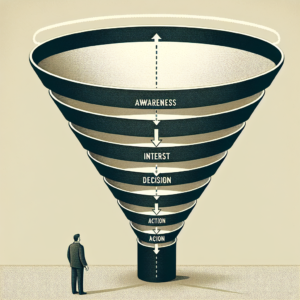
- Awareness:
- This is the top of the funnel, where potential customers first become aware of your product or service.
- Awareness can be created through marketing efforts such as social media, content marketing, advertising, or word of mouth.
- The goal is to attract a wide audience and generate interest in what you have to offer.
- Interest:
- Once individuals are aware of your product, the next stage is to capture their interest.
- This involves providing more detailed information, educational content, or engaging with your audience through webinars, newsletters, or interactive content.
- The goal is to deepen their interest and move them from being passive observers to actively considering your offering.
- Consideration:
- At this stage, potential customers are actively evaluating your product or service.
- They may compare it with alternatives, read reviews, and seek additional information.
- Marketers often provide case studies, product demonstrations, or free trials to showcase the value and benefits of their offering.
- Intent:
- In this stage, prospects have expressed a clear intent to make a purchase.
- They may request a quote, initiate contact with your sales team, or take specific actions that indicate their readiness to move forward.
- This is a critical point where effective communication and personalized engagement can significantly impact the conversion rate.
- Purchase:
- The purchase stage is where the prospect becomes a customer by making a transaction.
- This could involve completing an online order, signing a contract, or finalizing any necessary paperwork.
- The goal is to make the buying process as smooth as possible to encourage conversion.
- Post-Purchase/Retention:
- The relationship with the customer doesn’t end with the purchase; it continues into the post-purchase phase.
- This stage involves providing excellent customer support, delivering the product or service as promised, and ensuring customer satisfaction.
- Happy customers are more likely to become repeat customers and advocates for your brand.
- Advocacy:
- Satisfied customers may become advocates for your brand, sharing positive experiences with others.
- Encourage and leverage customer testimonials, reviews, and referrals to attract new prospects into the top of the funnel.
- A strong advocacy loop can help fuel future sales and contribute to the growth of your customer base.
Understanding and optimizing each stage of the sales funnel is crucial for businesses seeking to convert leads into loyal customers. It involves a combination of effective marketing, targeted communication, and a customer-centric approach to guide individuals seamlessly through the buying journey.
