

Anthony Rubin and Carlos Arellano join Alex Jones live in-studio.
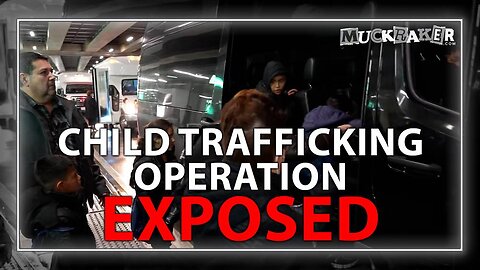
Exposing the Hidden Crisis: Child Trafficking Across the Border
In a recent interview with Alex Jones, investigative journalist Anthony Rubin uncovered a chilling reality about the trafficking of children across the U.S.-Mexico border. What many perceive as a simple issue of illegal immigration is, in fact, part of a much darker operation—one that exploits vulnerable children for a variety of horrific purposes, from forced labor to sexual exploitation.
Rubin, known for his hard-hitting investigations into human trafficking and organized crime, has spent years uncovering the hidden networks behind these operations. According to him, the problem is far more widespread and coordinated than most people realize.
The Mechanics of Trafficking
“These children are being smuggled into the United States, often without any documentation or traceable history,” Rubin explained during the interview. “The traffickers prey on families desperate for a better life and promise them safe passage to the U.S., only to sell the children into forced labor or sexual trafficking once they arrive.”
The process begins with migrants crossing the border—often through remote or under-patrolled areas—and once they enter the U.S., the children are hidden among large groups of migrants or passed off as the children of adults who are not their parents. With overwhelmed border officials and an overburdened immigration system, traffickers take advantage of the lack of resources to conduct their operations undetected.
“These kids are being treated as nothing more than commodities,” Rubin stated. “Once they’re in the U.S., they’re shuffled from one location to another, frequently placed into the hands of criminal organizations or individuals looking to exploit them.”
A Complex Network
The trafficking networks operate on both a domestic and international level. Rubin’s investigation has revealed that some of the groups involved have ties to powerful drug cartels, which have expanded their operations to include human trafficking due to its high profitability. Others operate independently, focusing solely on trafficking vulnerable minors.
The demand for trafficked children comes from various sectors, with victims being used for forced labor, sexual exploitation, and even illegal adoptions. The children are often moved between different states or hidden within the system, making it difficult for law enforcement to track them.
“These networks are incredibly sophisticated,” Rubin said. “They know how to hide in plain sight. They exploit every gap in the system, and it’s been incredibly difficult to dismantle these operations because of the sheer volume of victims and the lack of comprehensive tracking and monitoring systems.”
The Role of the Authorities
Despite the scale of the problem, authorities have struggled to address child trafficking in a meaningful way. The lack of resources at the border, combined with the overwhelming number of migrants crossing into the U.S., has made it difficult for officials to identify trafficking victims.
“Many of these children go unnoticed. They’re swept up in the system and lost before anyone even realizes what’s happened,” Rubin pointed out. “Traffickers use the chaos at the border to their advantage, and the children they exploit often don’t have anyone looking out for them.”
While some efforts have been made to increase the identification of trafficking victims, Rubin believes much more needs to be done to break the cycle. Increased training for border officials, better systems to track and protect minors, and stronger penalties for traffickers are all crucial steps in the fight to protect vulnerable children.
The Call for Awareness
Rubin’s message is clear: the first step to ending child trafficking at the border is raising awareness. “People need to know that this isn’t just an immigration problem. This is a human rights crisis,” he said. “We have to shift the conversation away from politics and focus on the fact that children are being sold for profit.”
The key to dismantling these trafficking rings, according to Rubin, lies in shining a light on their activities. By bringing attention to the issue, the public can pressure lawmakers and law enforcement to take more immediate and aggressive action. The more people understand the scope of the problem, the more pressure there will be to fix the system that allows such crimes to flourish.
“This isn’t just about policy. It’s about saving lives,” Rubin concluded. “And it’s about time we take action before more children are lost to these criminals.”
The interview served as a stark reminder of the reality facing children at the border and the ongoing battle against human trafficking. While the issue is complex, the need for awareness, action, and reform is urgent. The traffickers won’t stop until we make them, and the children caught in the crossfire are depending on all of us to act.
