

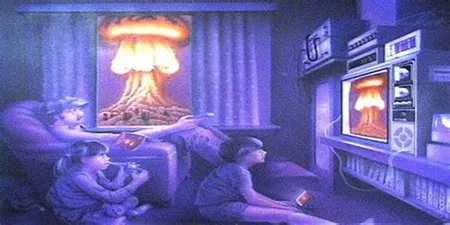
Predictive programming refers to the idea that popular media can be used to subtly influence public opinion and prepare people for future events. The theory suggests that certain themes, symbols, and ideas are introduced into movies, TV shows, music, and other forms of media in order to subconsciously prepare the public for future events. The idea behind this is that people will be more likely to accept or even anticipate these events when they occur.
One key aspect of predictive programming is the notion that a lack of response to a particular action or idea can be taken as tacit approval of that action. In other words, if people are repeatedly exposed to certain themes or ideas in popular media, and they do not actively resist or criticize them, then it can be seen as a form of passive acceptance. This can create a self-fulfilling prophecy, where the media subtly shapes public opinion and behavior in a particular direction, leading to the eventual manifestation of the predicted event.
While there is some debate among experts as to whether predictive programming is a real phenomenon, many people point to examples of this in popular media. For example, some have suggested that the prevalence of themes related to terrorism in Hollywood movies during the 1990s and early 2000s may have helped to prepare the public for the events of 9/11. Similarly, the prevalence of dystopian themes in recent popular media has been seen by some as a way of preparing the public for a future in which global catastrophes or societal collapse may be more likely.
It is important to note that while predictive programming may be a real phenomenon to some extent, it is not necessarily a deliberate or conscious effort by those in power. Instead, it may be a more subtle and nuanced effect of the ways in which popular media reflects and shapes our collective beliefs and values. Nevertheless, the potential implications of predictive programming are significant, as they suggest that the media can play a powerful role in shaping public opinion and behavior, whether consciously or unconsciously.
